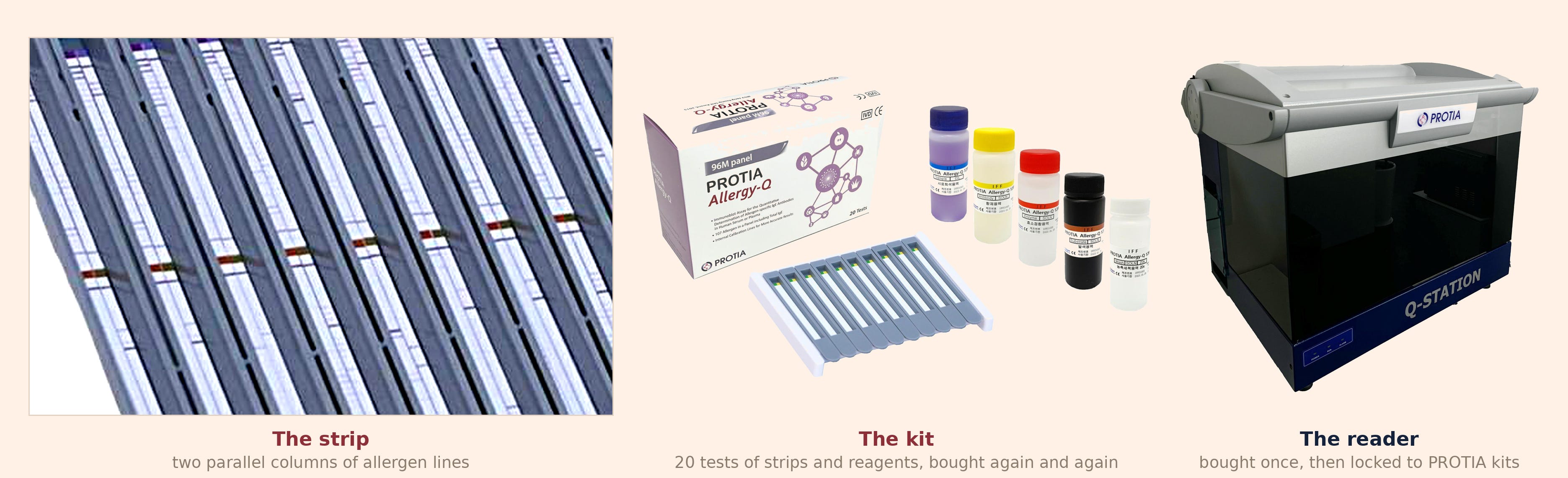
A test strip is a piece of paper about the size of a stick of gum, and the number of allergies it can check is simply the number of thin lines you can print on it. Printing one more line costs almost nothing. That is one half of why this business works; the other half is that the strip only fits its own machine.
The shares trade at ₩4,955, which values PROTIA (KOSDAQ: 303360, 프로티아) at ₩63.8bn, about $45m.
Everything below is measured over the twelve months to 30 June 2026, the latest filed numbers.
Revenue ₩17.7bn. The June half grew 40%, the year before that 44%
Operating profit ₩4.7bn, a 26.3% margin
No borrowings, and ₩13.9bn of cash, 22% of the market value
10.7x EV/EBIT on the last twelve months, 8.3x on this year’s estimate
Peter Lynch had a name for this shape: a fast grower. Small, growing 20 to 25% or better, in an industry nobody follows, with the P/E below the growth rate. Here it is about 14 against 40. He also said fast growers are where investors lose the most money when the story breaks.
What PROTIA actually does
Your doctor wants to know what you are allergic to. The old way is the skin prick test: a grid marked on your forearm, a drop of each allergen, a prick through the skin, twenty minutes of waiting to see which spots swell.
PROTIA sells the newer way, and from the patient’s side there is almost nothing to it. A nurse draws blood from a vein, sends the tube off to a laboratory, and you are out of the room in two minutes.
In the lab it looks like this.